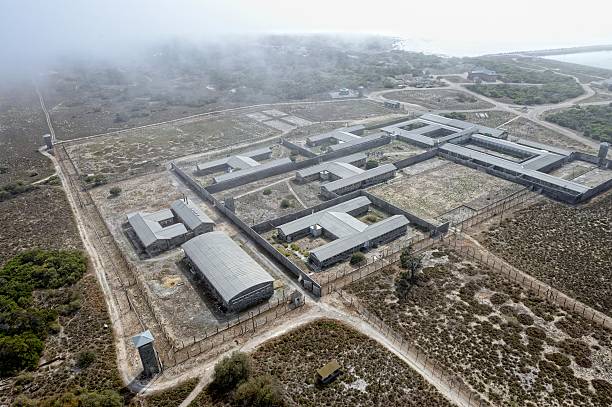
Thirteen kilometres off the coast of Cape Town, reachable by a 30-minute ferry from the V&A Waterfront, sits a small island that carries the weight of an entire nation’s history. Robben Island — windswept, flat, surrounded by the cold Atlantic — was for centuries a place of exile, imprisonment and suffering. Today it stands as one of South Africa’s most powerful symbols of resilience, reconciliation and the long road to freedom.
A History That Stretches Back 400 Years
Robben Island’s role as a place of banishment began long before apartheid. As early as the 1650s, the Dutch East India Company (VOC) used the island to exile political prisoners and those who resisted colonial rule. Among the earliest prisoners was Autshumato — known to the Dutch as Harry the Strandloper — a Khoikhoi leader who was one of the first to understand the intentions of the Dutch settlers and attempted to resist them. He became the first known political prisoner on the island when Jan van Riebeeck exiled him there in 1658. Remarkably, he later escaped — the only person ever to do so from Robben Island.
In the centuries that followed, the island served as a leper colony, a mental asylum, a military outpost during both World Wars, and a naval station. But it is the apartheid era — and particularly the period between 1964 and 1991 — that has defined Robben Island in the world’s memory.
The Maximum Security Prison
When the National Party government came to power in 1948 and began systematically enforcing apartheid — the brutal policy of racial separation — resistance movements grew stronger across South Africa. The African National Congress (ANC), the Pan Africanist Congress (PAC) and other organisations fought back, and the state responded with mass arrests, banning orders and long prison sentences.
In 1964, Nelson Mandela arrived on Robben Island. He had been convicted of sabotage and conspiracy to overthrow the government at the Rivonia Trial, and was sentenced to life imprisonment. He was 45 years old. He would remain on the island for 18 of his 27 years in prison.
Life in the maximum security section was deliberately degrading. Prisoners were classified by race — black prisoners received the least food, the worst clothing and the harshest conditions. Mandela, classified as the lowest category of prisoner, was issued short trousers — a deliberate humiliation. He wore long trousers only after years of protest.
The work was gruelling. Prisoners spent years in the limestone quarry, breaking rocks under the blazing summer sun. The lime reflected sunlight so intensely that many prisoners — including Mandela — suffered permanent eye damage. The quarry later became an unlikely place of education, where prisoners debated politics, philosophy and strategy in hushed conversations. They called it “The University.”
Cell 5, Section B
Mandela’s cell — Cell 5 in Section B — measured just 2.1 metres by 2.4 metres. There was a mat on the floor, a bucket for a toilet, and a small desk. He was allowed one visitor and one letter every six months in his early years. Both the letter and the visit were censored and monitored.
Despite these conditions, the political prisoners of Robben Island refused to be broken. They established internal structures, continued their political education, smuggled messages and maintained their dignity in the face of systematic dehumanisation. The island became a crucible in which many of South Africa’s future leaders were forged — among them Walter Sisulu, Govan Mbeki, Ahmed Kathrada, and Robert Sobukwe.
The End of Apartheid and UNESCO Recognition
The last political prisoners left Robben Island in 1991 as apartheid crumbled under the weight of international sanctions, internal resistance and the changing tide of history. Nelson Mandela was released from Victor Verster Prison on 11 February 1990. Four years later, in the first democratic election South Africa had ever held, he became the country’s first Black president.
In 1999, Robben Island was declared a UNESCO World Heritage Site — recognised not only for its painful history but as a universal symbol of the triumph of the human spirit over oppression. The citation notes that the island “symbolises the triumph of democracy and freedom over oppression and racism.”
Visiting Robben Island Today
Today Robben Island is open to the public and is one of South Africa’s most visited destinations. The tour is guided — critically — by former political prisoners themselves. Men who were imprisoned here, who broke rocks in that quarry, who slept on those mats, walk you through the cells and tell their own stories. It is an experience unlike anything else in the world.
The ferry departs from the Nelson Mandela Gateway at the V&A Waterfront several times daily. The full visit — including the ferry crossing and guided tour — takes approximately three and a half hours. Booking in advance is strongly recommended, especially during peak season, as tours sell out regularly.
The tour includes a bus ride around the island, passing the quarry, the maximum security prison, Robert Sobukwe’s isolated house (he was kept in solitary confinement for years), and the breathtaking views back across the water to Table Mountain and the Cape Town city bowl. You will also visit the prison building itself, walking through the corridors and standing at the door of Mandela’s cell.
A Living Lesson
What strikes every visitor to Robben Island is not despair — it is something closer to awe. That human beings could endure what was endured here and emerge not with bitterness but with a commitment to reconciliation and democracy is genuinely extraordinary. Mandela famously said that during his years on the island, he came to understand his oppressors, and that understanding freed him from hatred.
At Mzansi Safari Tours, we include Robben Island as part of our multi-day packages and can arrange the ferry booking as part of your Cape Town itinerary. It is, without question, one of the most important and moving experiences available anywhere on the African continent.
“I am not truly free if I am taking away someone else’s freedom, just as surely as I am not free when my freedom is taken from me.” — Nelson Mandela