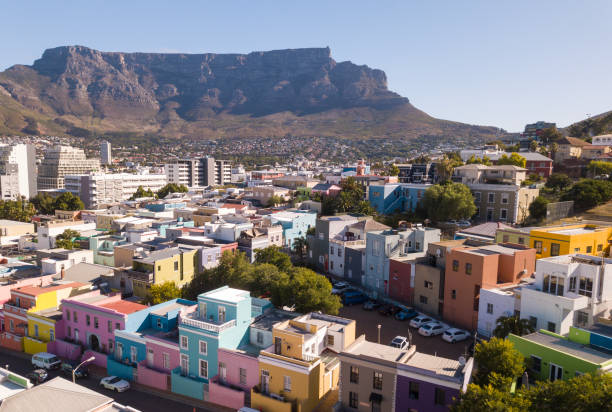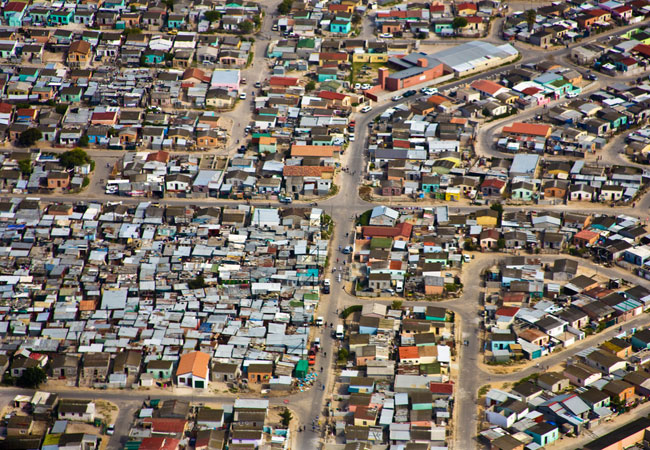
Most visitors to Cape Town arrive, look up at Table Mountain, walk along the Waterfront and drive through the leafy suburbs of the Atlantic Seaboard. They see a city of extraordinary natural beauty and cosmopolitan energy. But there is another Cape Town — vast, complex, densely populated and often invisible to the tourist eye — and it stretches across the sandy plains to the east and south-east of the city centre. This is the Cape Flats.
Understanding the Cape Flats is not separate from understanding Cape Town. It is essential to it. The story of how the Flats came to be is the story of apartheid’s most deliberate and lasting wound on this city — and the story of the communities who, despite everything, built lives of profound richness and resilience there.
How the Cape Flats Were Created
The Cape Flats is a low-lying, predominantly sandy area that was largely uninhabited until the mid-20th century. It floods in winter, bakes in summer, and the Cape south-easter — the wind locals call “The Cape Doctor” — howls across it relentlessly. It was not land anyone would have chosen to live on.
The apartheid government chose it for other people.
The Group Areas Act of 1950 was one of apartheid’s most destructive pieces of legislation. It designated different residential areas for different racial groups — and in Cape Town, it meant the forcible removal of hundreds of thousands of Coloured, Black and Indian residents from the established inner-city neighbourhoods where they had lived for generations. District Six, Tramway Road, Simon’s Town, Constantia — communities that had roots stretching back a century or more were bulldozed and their residents trucked out to the Cape Flats.
District Six was the most notorious of these demolitions. A vibrant, densely populated inner-city neighbourhood of over 60,000 people — musicians, traders, teachers, factory workers — was declared a “whites only” area in 1966. The houses were bulldozed. Families were separated and scattered across the Flats to new townships: Mitchells Plain, Hanover Park, Manenberg, Bonteheuwel, Khayelitsha. They were given houses — small, identical, on sandy, treeless plots — and told this was now their home.
The Townships of the Flats
Today the Cape Flats contains some of the largest and most densely populated urban areas in South Africa. Khayelitsha, established in 1983 to house Black African residents, is now home to an estimated 500,000 to 1 million people — the population estimates vary enormously because informal settlement growth is so rapid. Mitchell’s Plain, built for Coloured residents, houses around 310,000 people. Gugulethu, Langa — Cape Town’s oldest township, established in 1927 — and Nyanga complete the landscape of communities that apartheid built on land nobody wanted.
Langa is particularly significant. As the oldest township in Cape Town, it carries layers of history — from the mass pass-burning protests of the 1960s to the extraordinary cultural life that developed within its boundaries despite every attempt to suppress it. Today Langa has a thriving arts scene, a craft market, shebeens and restaurants, and community organisations that have been working to improve residents’ lives for decades.
The Music, Food and Culture of the Flats
One of the things that consistently surprises visitors to the Cape Flats is the richness of its cultural life. The Cape Flats gave South Africa — and the world — some of its most important musical traditions. Cape Jazz, rooted in the Coloured communities of the Flats, is a distinctive sound that blends American jazz with Malay musical traditions, marabi and township rhythms. Artists like Abdullah Ibrahim (Dollar Brand), Robbie Jansen and Jonathan Butler emerged from this world.
The Cape Minstrel Carnival — the Kaapse Klopse — is one of Cape Town’s most spectacular annual events, and it is rooted entirely in Coloured Cape Flats culture. Every 2 January, thousands of elaborately costumed minstrels parade through the city streets in a tradition that dates back to the 19th century, when enslaved people were given a single day of freedom each year on the second of January.
The food of the Cape Flats — boeber, koesisters, denningvleis, gatsby sandwiches, braai culture — is a cuisine that developed over centuries from the fusion of Cape Malay, Indonesian, Dutch and African cooking traditions. A gatsby — a half-metre-long bread roll filled with chips, polony, atchar and your choice of protein — is perhaps the Flats’s most iconic contribution to South African food culture.
Visiting the Cape Flats Responsibly
Township tourism is a nuanced and sometimes contested space. Done well — with community involvement, local guides and genuine cultural exchange — it can be meaningful for both visitors and residents. Done badly, it becomes poverty tourism: bus loads of outsiders photographing people in their homes from a distance.
At Mzansi Safari Tours, when we include township visits in our itineraries, we do so exclusively with community-based guides — people who live in these areas, who understand their history and complexity, and who can offer genuine insight rather than a sanitised surface view. We visit community projects, local restaurants and cultural sites. We support businesses in the townships directly.
A visit to Langa can include a walk through the oldest hostel buildings (now partially converted to apartments), a traditional Xhosa meal, a visit to the Guga S’thebe Arts and Cultural Centre, and conversations with residents who are proud of their community and eager to share its story. It is one of the most memorable experiences available in Cape Town — not because it is comfortable, but because it is real.
The Flats Today
The Cape Flats continues to face serious challenges. Gang violence, unemployment, drug addiction and inadequate infrastructure are real and ongoing problems in many parts of the area. But so is the extraordinary energy of communities that have refused, across generations, to be defined by what was done to them. Social entrepreneurs, artists, educators, chefs and activists are building something new on the foundations of what apartheid left behind.
Cape Town cannot be understood without the Cape Flats. And the Cape Flats cannot be understood without its history — a history of deliberate dispossession, of extraordinary cultural survival, and of a community still writing its own next chapter.